

 Deutsch
  Français
  Español
  Português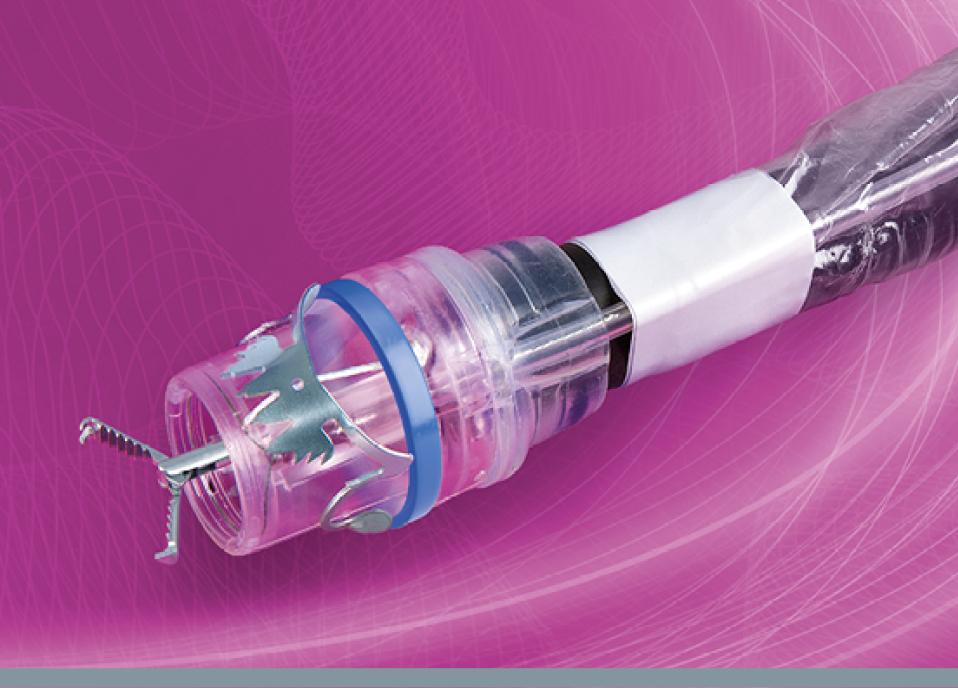
diagnostic FTRD® – New case series in pediatric patients
First case series using the diagnostic FTRD® in pediatric patients with suspected Hirschsprung’s disease demonstrates 100% technical success and conclusive histopathological results
Key findings
- 100% technical success rate and 100% full-thickness resection rate (13/13 patients)
- Median biopsy size: 18.3 × 14.8 × 3.7 mm (range: 13–22 × 13–21 × 1–8 mm; comparable to open surgical biopsy specimens)
- Histopathological analysis was conclusive in all biopsies (13/13), confirming or excluding Hirschsprung’s disease in each case
- Only 1 adverse event during 1-year follow-up: non-hemodynamically relevant rectal bleeding (successfully managed with electrocautery)
- Procedure was performed under sedation only (no general anesthesia required)
- Patients occasionally needed pain medications, but all patients were discharged pain-free
Study details
- Single-center retrospective case series in Germany (05/2024 – 09/2025)
- 13 pediatric patients aged 3.5–14.4 years (median 9.5 years) with therapy-refractory constipation
- Aim: Evaluation of EFTR using the diagnostic FTRD® as a diagnostic approach for Hirschsprung’s disease in children
- Indications: Therapy-refractory constipation with suspected Hirschsprung’s disease; EFTR was performed 2 cm above the linea dentata in the distal rectum (to exclude an ultrashort variant of Hirschsprung’s disease)
- Median procedure time: 13.8 min (range: 8.5–20 min)
- Median hospital stay: 2 days
González García RA, Riedel M, Regensburger AP, Rückel A, Schnell A, Appel M, Schaefer JT, Geppert C-I, Woelfle J, Hoerning A. Endoscopic Full-Thickness Resection Biopsy Using Ovesco Diagnostic FTRD® as a Tool to Diagnose Hirschsprung’s Disease in Children: A Case Series. Visc Med. Published online 2025, November 08. doi:10.1159/000549052 (Open Access)
 |

|
This content is intended exclusively for healthcare professionals. Please refer to the instructions for use and note country-specific approvals and indications.