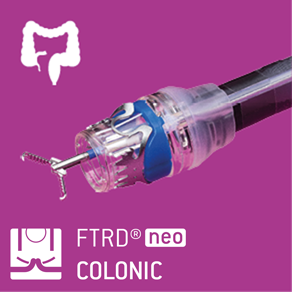
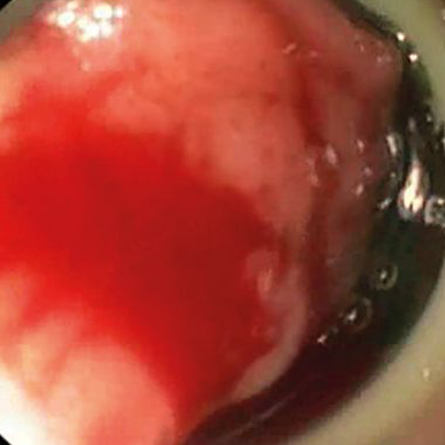
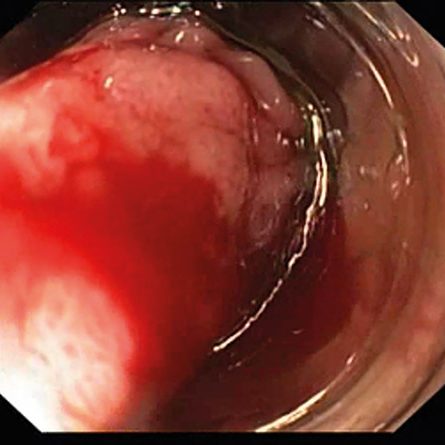
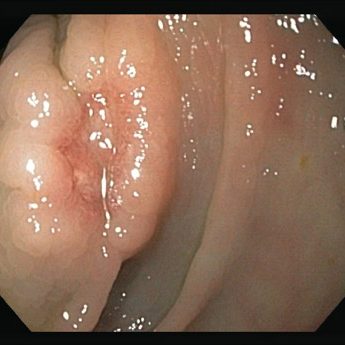
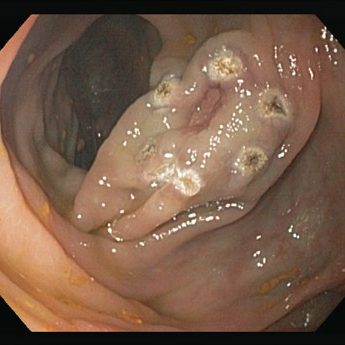
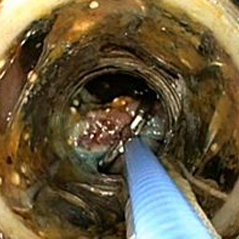
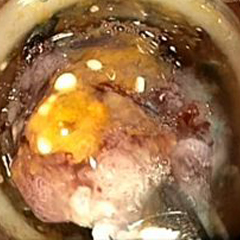
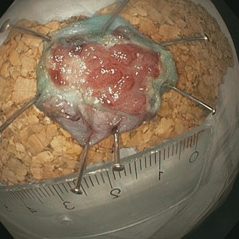
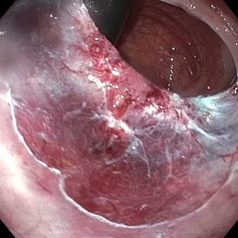
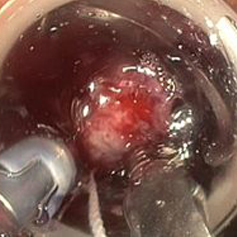
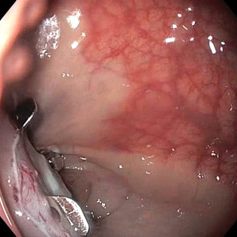
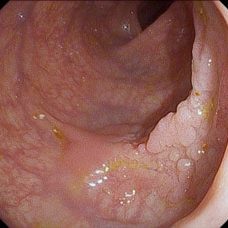
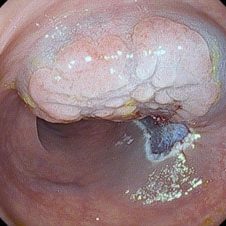
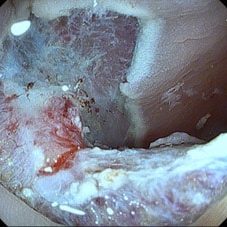
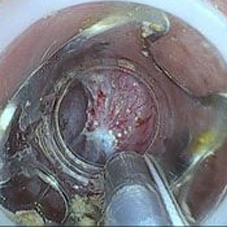
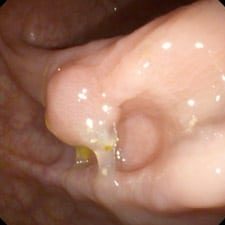
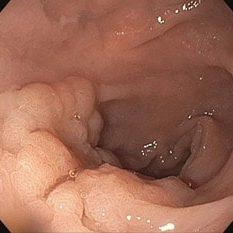
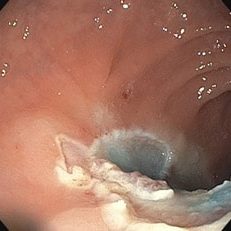
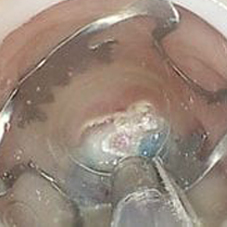
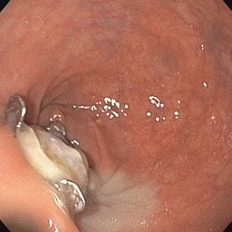
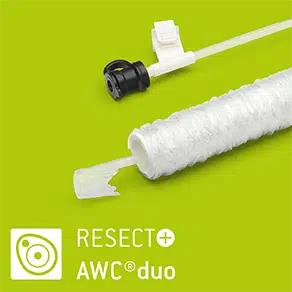
The colonic FTRD®neo enables endoscopic full-thickness resection of lesions in the colon and rectum.

LATEST PRODUCTS

+49 (0) 7071 96528 160
service@ovesco.com

Indications of the colonic FTRD®neo

The colonic FTRD®neo is a device for flexible endoscopy designed for full-thickness resection and diagnostic tissue acquisition through resection of suitable lesions in the colon and rectum.

The colonic FTRD®neo may be used for:

  • Non-lifting (recurrent) adenomas
  • Adenomas at difficult locations (at/in diverticula, appendix base)
  • Small subepithelial tumors
  • Submucosal tumors
  • Follow-up resection of malignant polyps
  • Early carcinomas

The colonic FTRD®neo

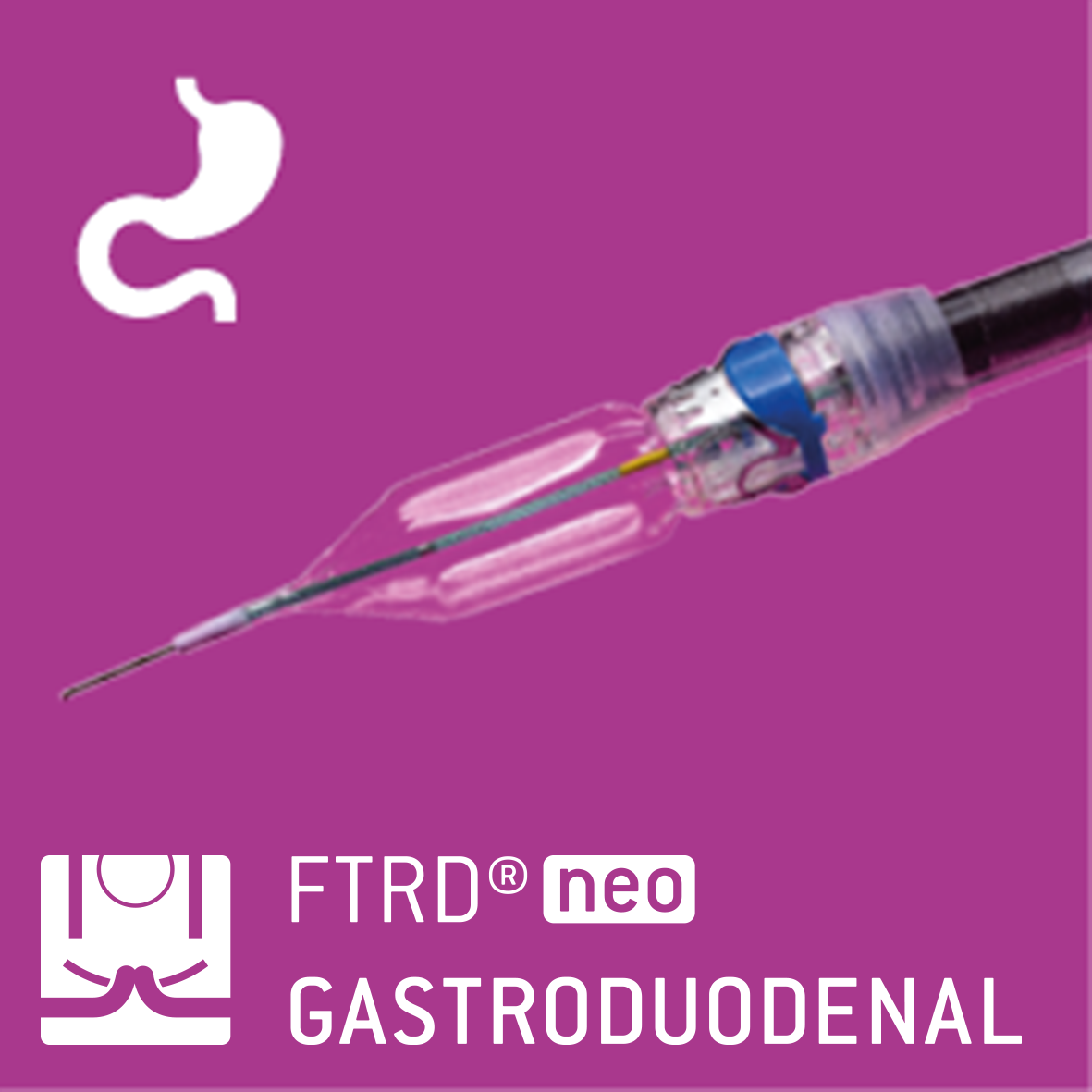
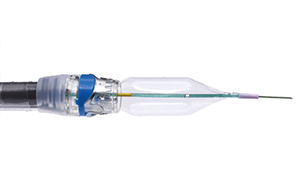
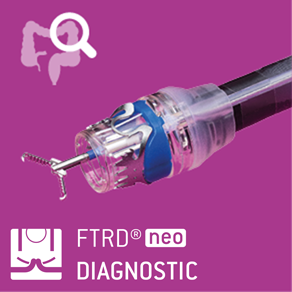
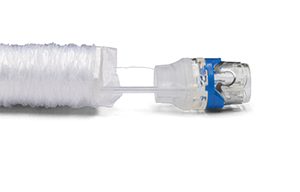
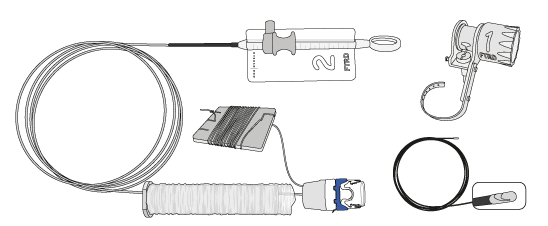
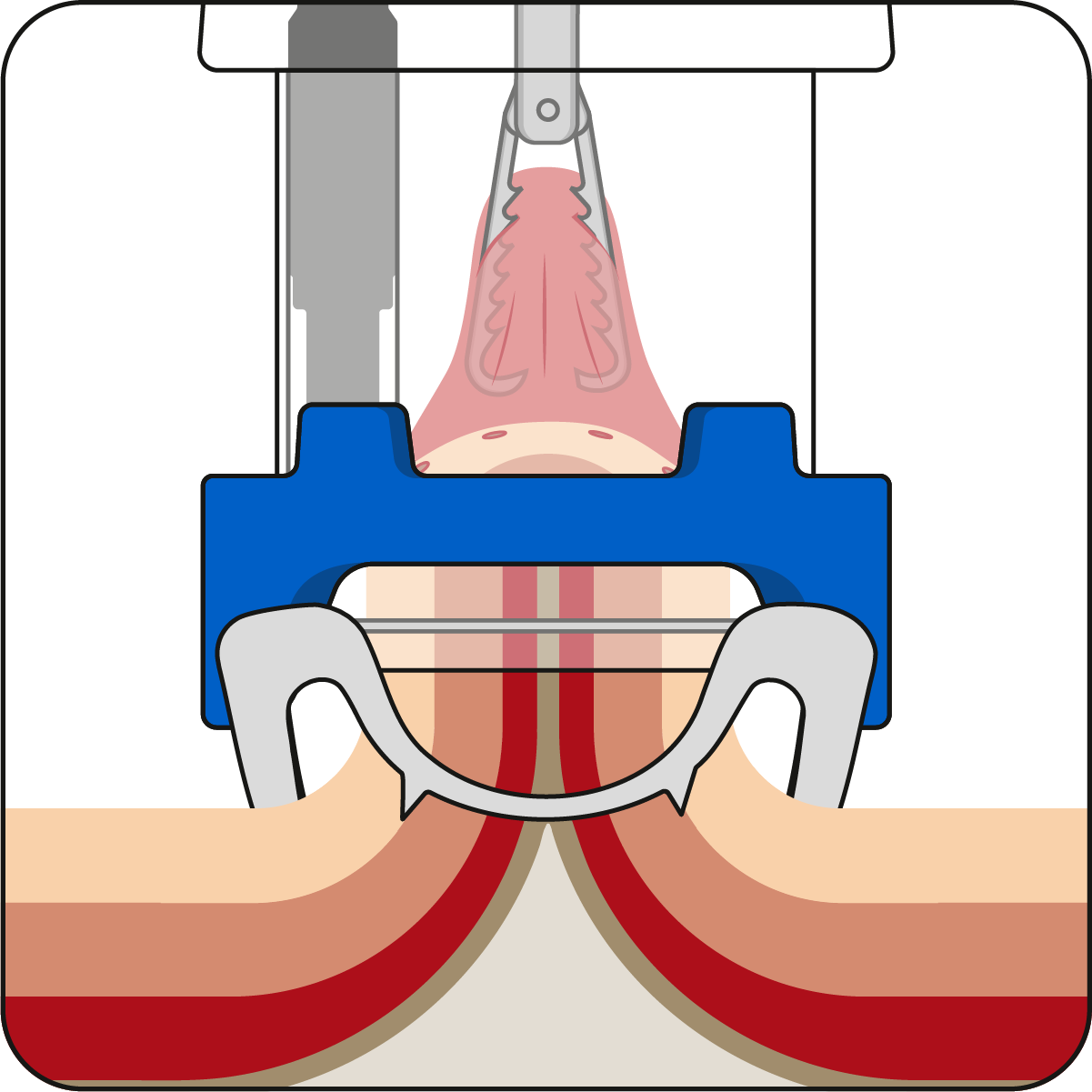
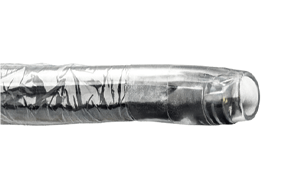
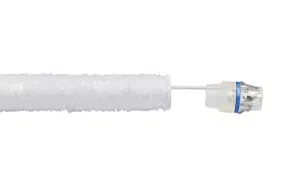
The colonic FTRD®neo consists of an application cap with a pre-loaded FTRD®neo clip, integrated HF snare and thread, thread retriever, endoscope sleeve with adhesive tapes, and FTRD®neo hand wheel.

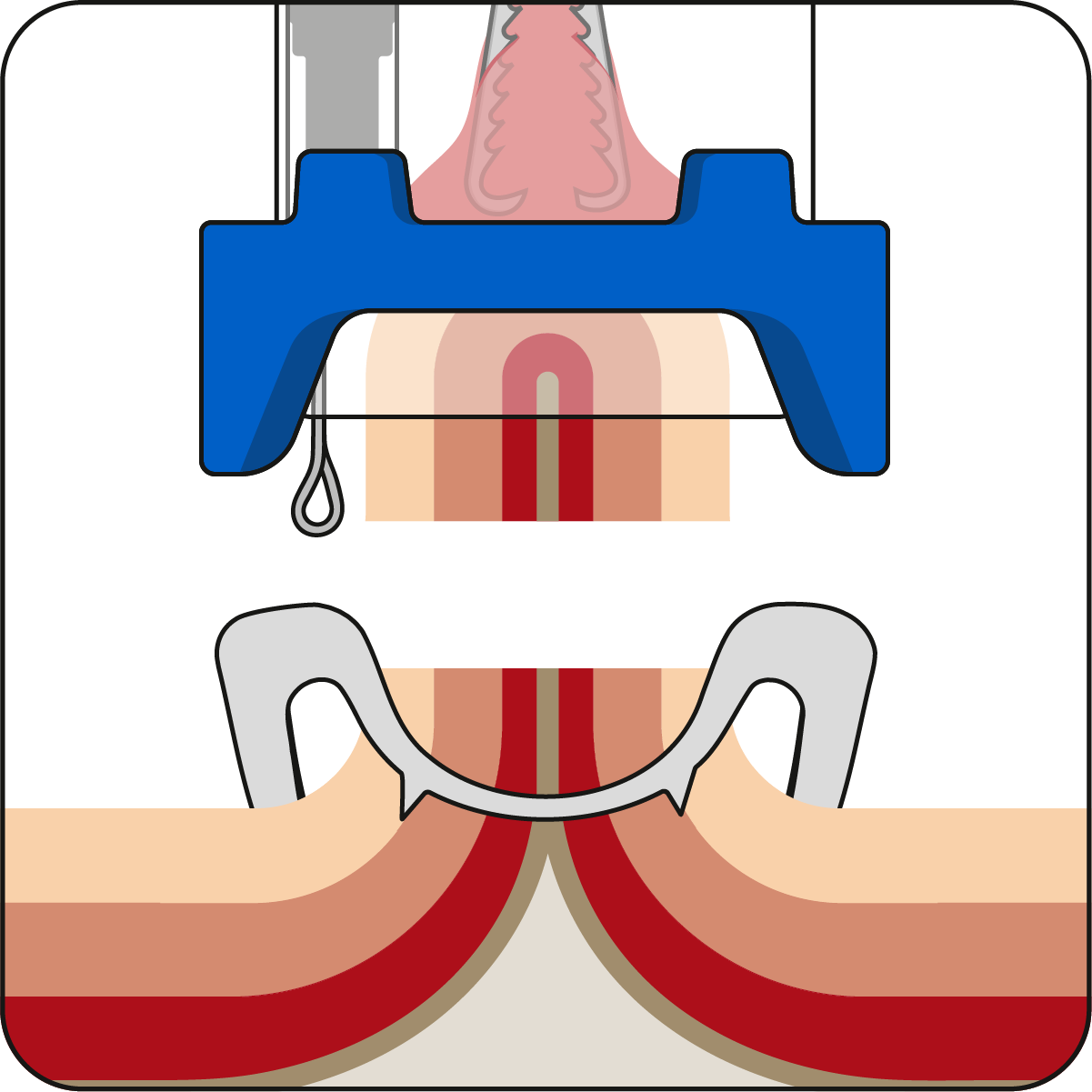
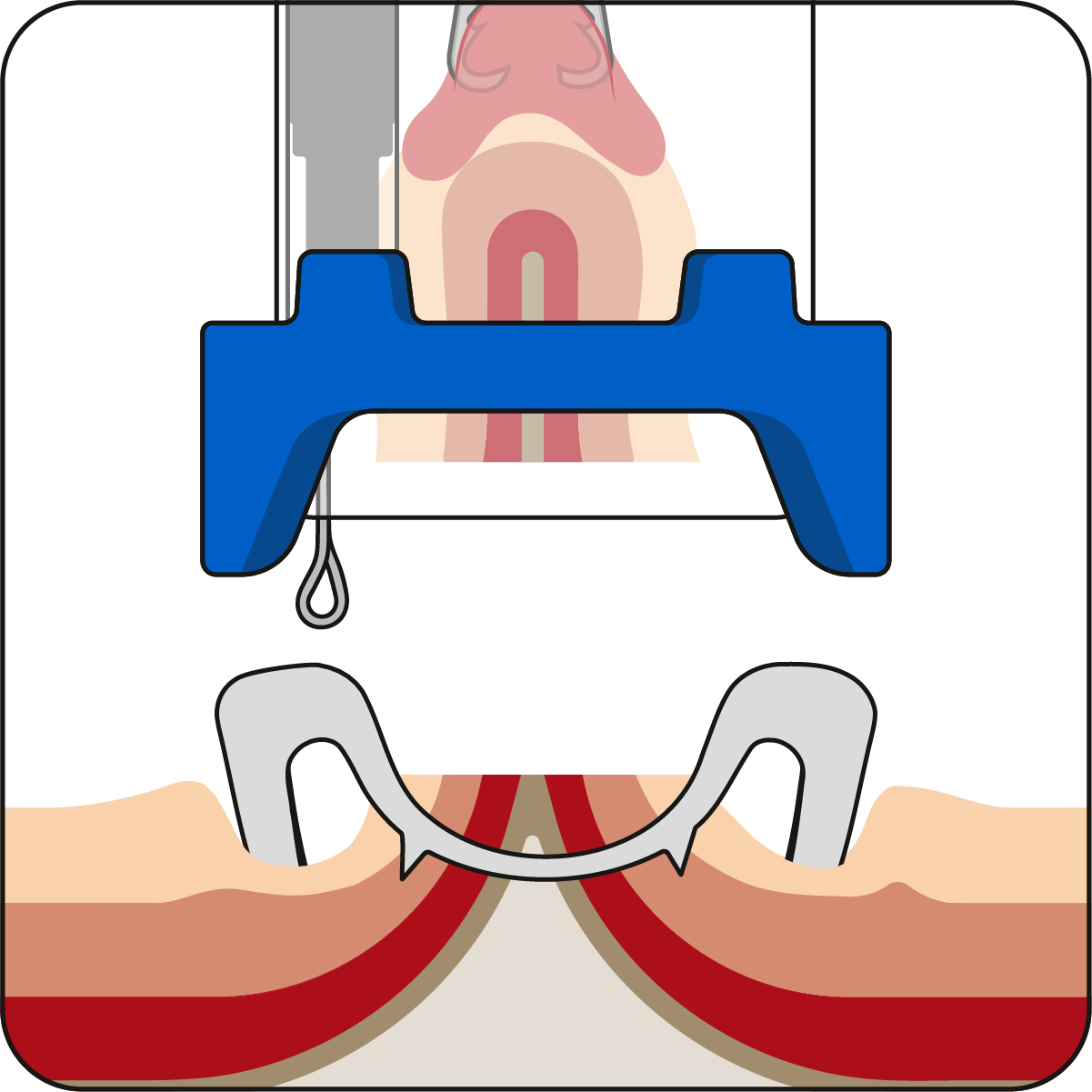
During the procedure, the application cap is mounted onto the endoscope tip, with the snare running outside the endoscope and protected by the endoscope sleeve (Click here to watch the assembly video). Rotating the hand wheel tensions the thread and deploys the clip; the integrated HF snare then cuts the tissue above the clip.

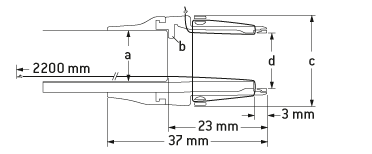
The colonic FTRD®neo is suitable for endoscopes with a diameter of 11.5 – 14.0 mm and a working channel diameter of at least 3.2 mm.

The colonic FTRD®neo Set

The colonic FTRD®neo is delivered as a complete procedure set and consists of the following products:

  • colonic FTRD®neo
    - colonic FTRD®neo application cap with pre-loaded clip and thread
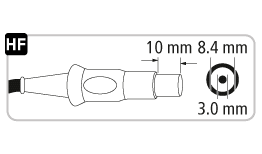
    - Integrated HF snare at the distal cap end
    - FTRD®neo hand wheel with silicone strap fixation
    - Thread retriever
    - Endoscope sleeve with adhesive tapes
  • FTRD® Marking Probe
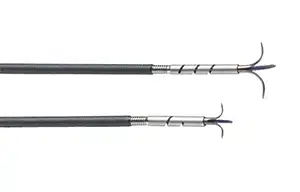
  • FTRD® Grasper

Participation in a training course is mandatory prior to purchasing and using the colonic FTRD®neo.

Dimensions and specifications
FTRDneo Colonic Logo [a] Compatible endoscope
diameter [mm]
[b] Min. working channel
diameter [mm]
[c] Max. outer
diameter (cap)[mm]
[d] Inner diameter (cap)
[mm]
Cap depth
[mm]
Ref.No.
colonic FTRD®neo Set 11.5 – 14.0 3.2 21.0 13.0 23.0 200.70n
Including FTRD® Marking Probe and FTRD® Grasper

Important notes

All FTRD® and FTRD®neo products are single-use devices.

Application of the colonic FTRD®neo

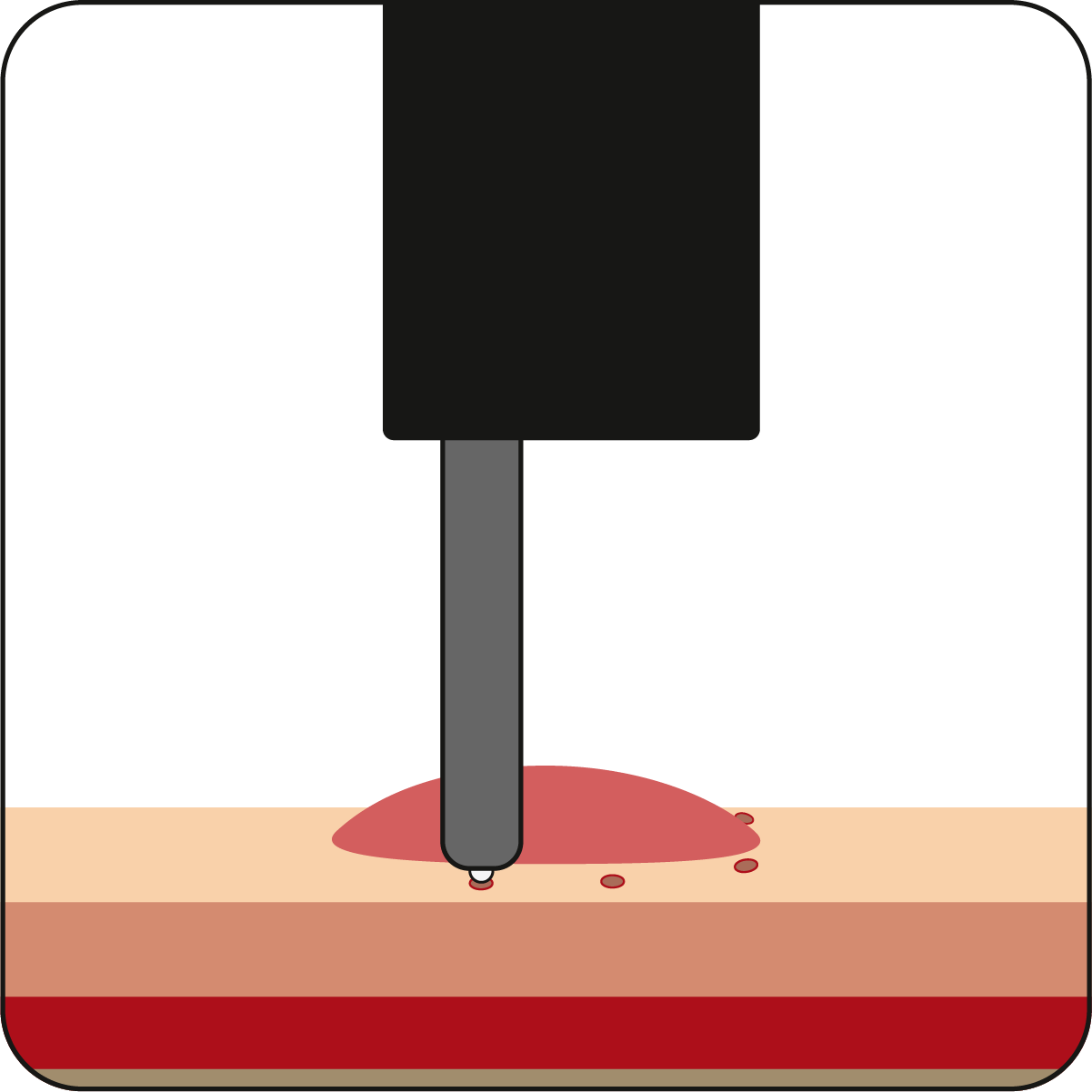
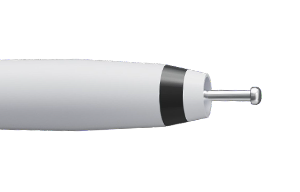
Mark the lesion with the FTRD® Marking Probe
Advance the endoscope to the resection site
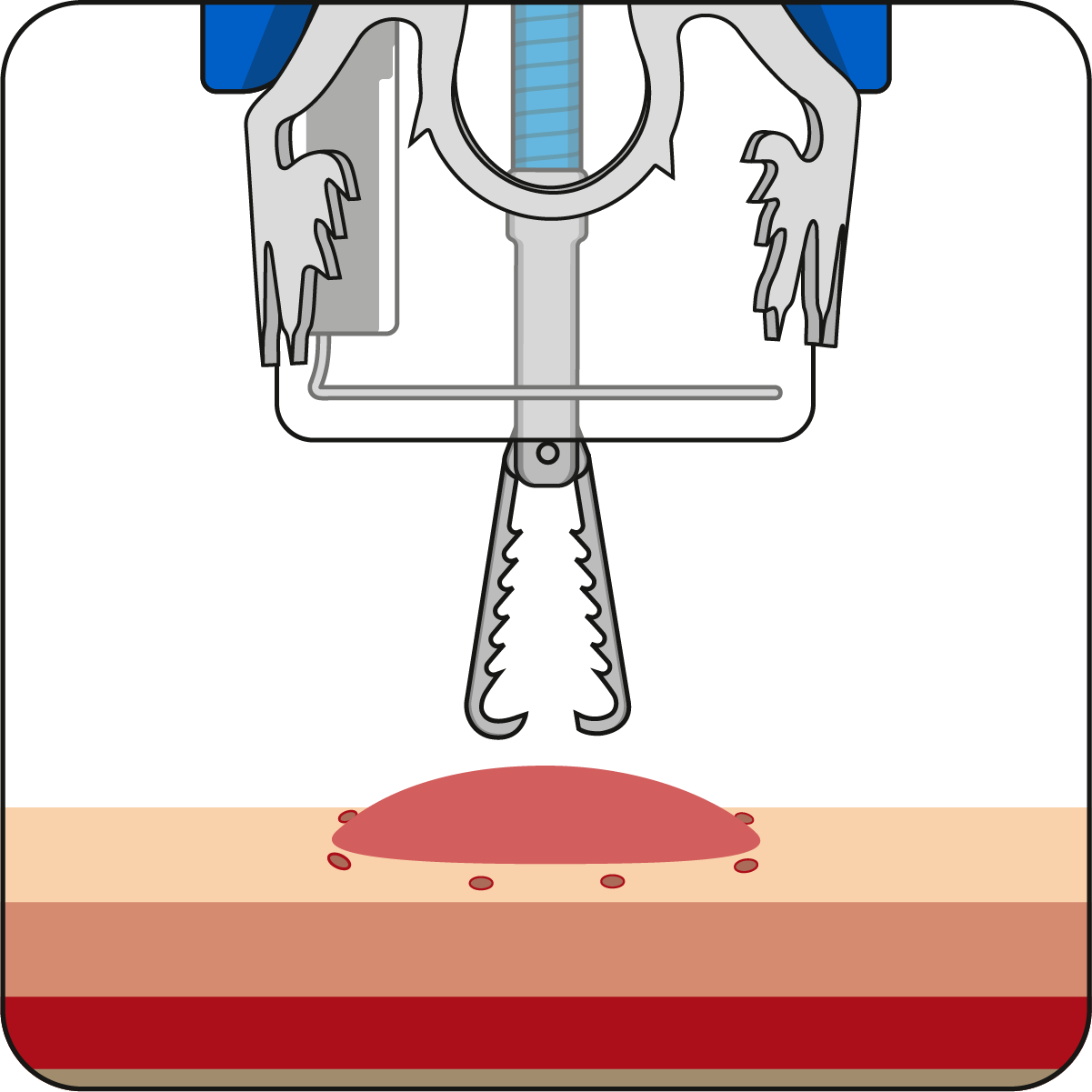
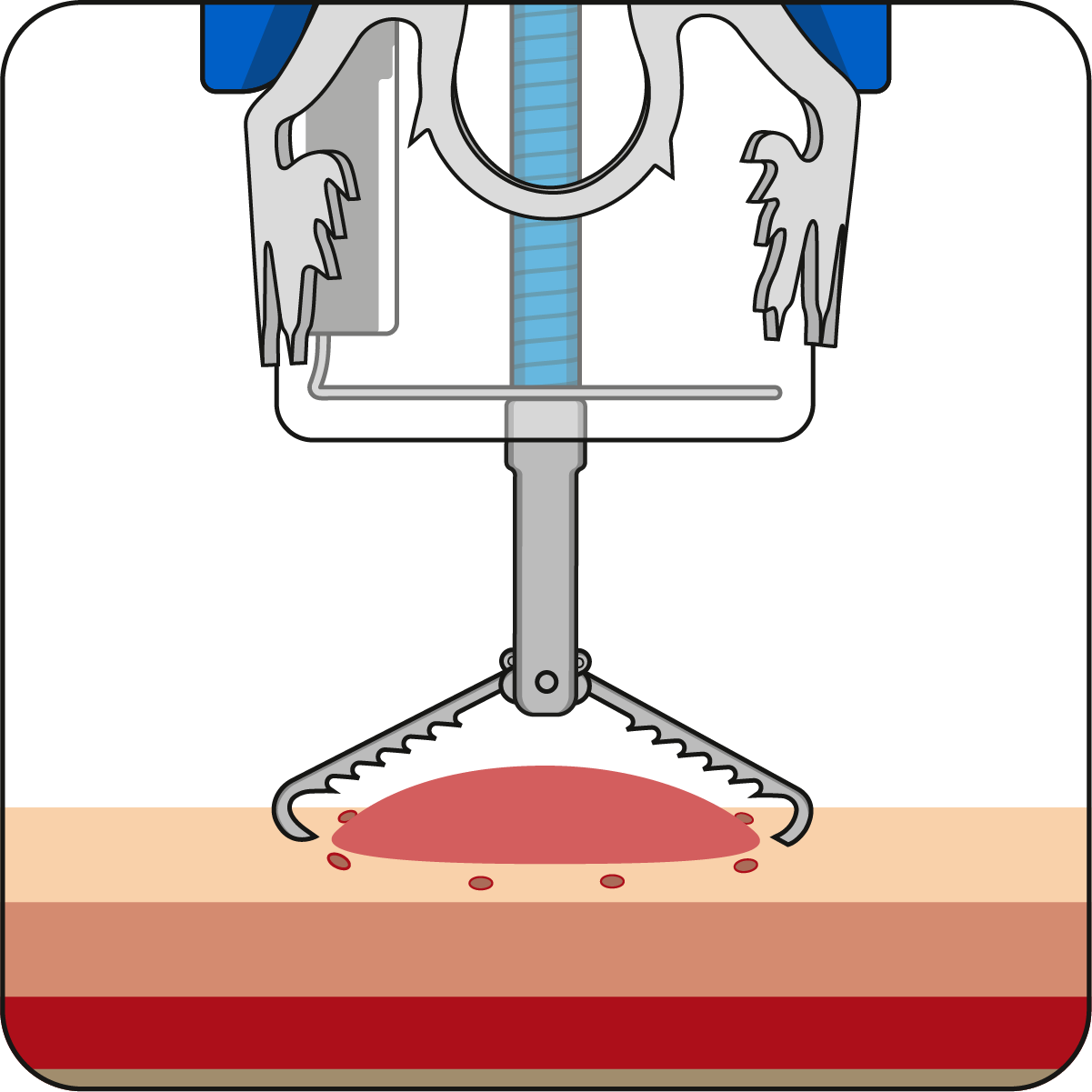
Grasp the lesion with the FTRD® Grasper
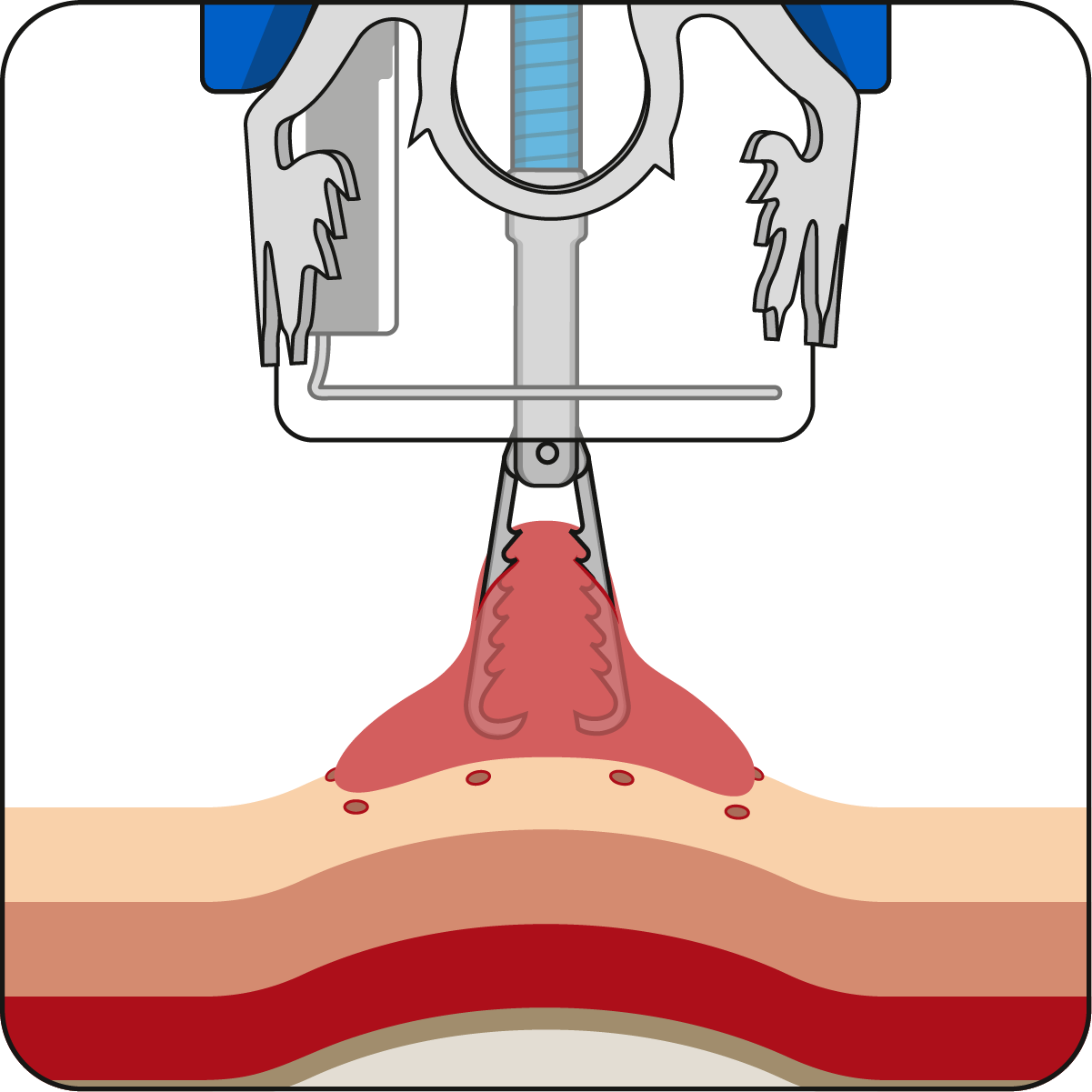
Mobilize the lesion into the application cap
Ensure the lesion is fully inside the cap – fix the grasper – deploy the clip
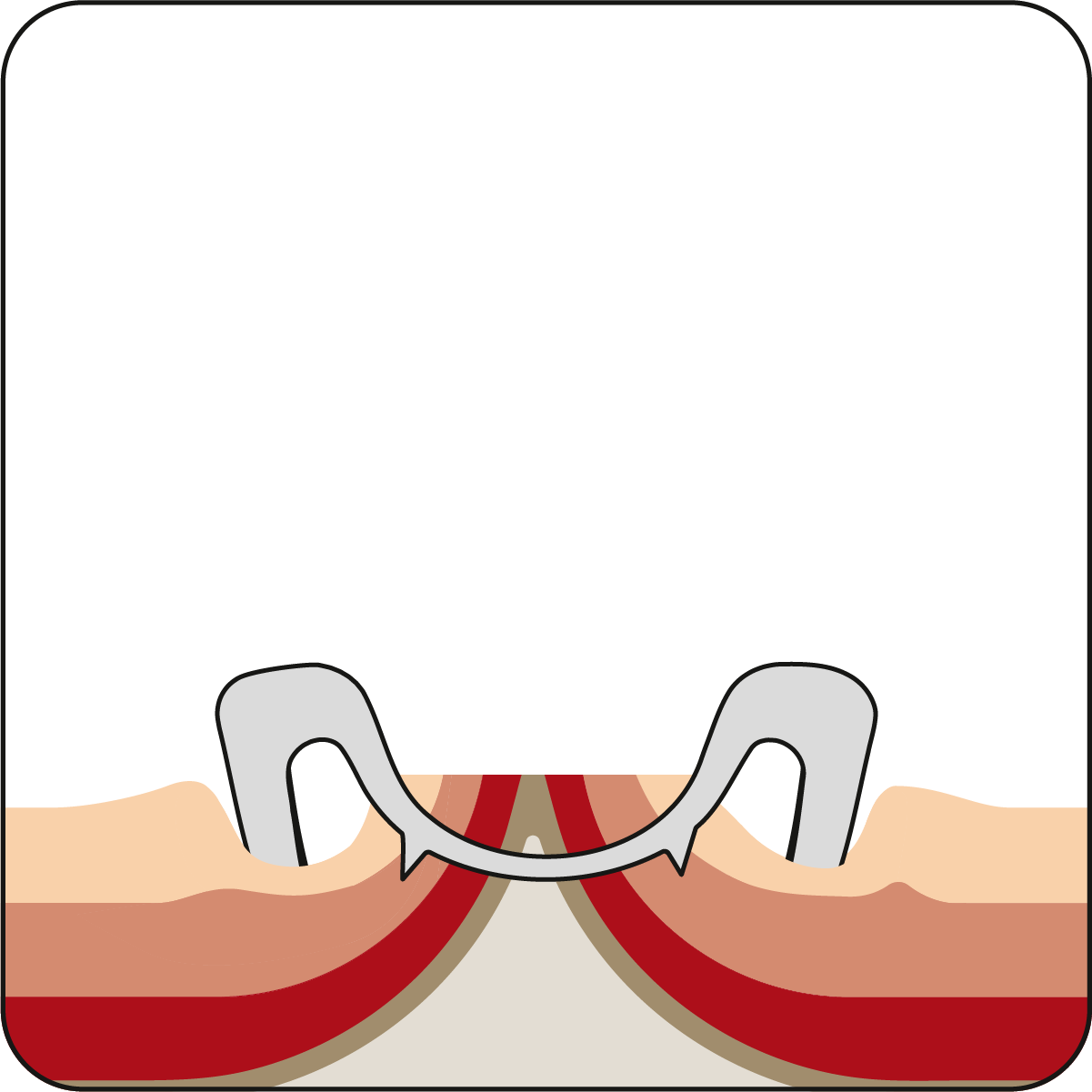
Resect the tissue and retrieve the specimen

Example 1*:

EFTR of a recurrent sessile adenoma (non-lifting sign) in the descending colon

Marking the lesion (with the FTRD® Marking Probe) before mounting the FTRD®
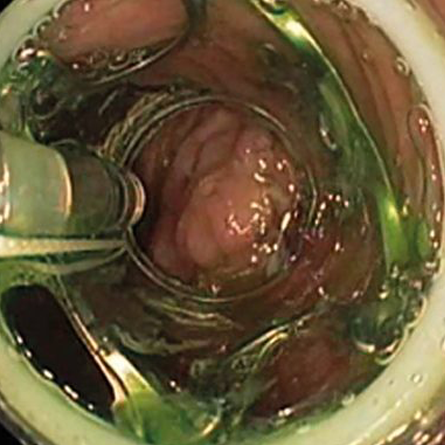
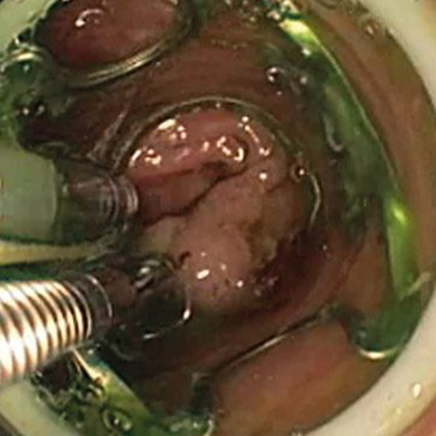
Grasping of the lesion with the FTRD® Grasper
Pulling the tissue into the cap and fixing it in place
Target tissue fully inside the FTRD® cap - clip deployment by rotating the hand wheel
Snare closure and HF resection of the target tissue; specimen retrieval and inspection of the resection site

* Source: Prof. K. Caca and Dr. A. Schmidt, Klinikum Ludwigsburg, Dept. of Internal Medicine, Gastroenterology, Hemato-Onkology, Diabetes and Infektious Diseases, Germany

Example 2*:

De novo resection following incomplete polypectomy in the descending colon (early carcinoma)

Status post incomplete polypectomy in the descending colon (early carcinoma)
Lesion marked with the FTRD® Marking Probe
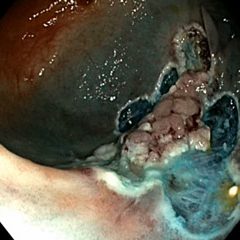
Resection site after FTRD® procedure (tissue previously marked with Indian ink)

* Source: Prof. K. Caca and Dr. A. Schmidt, Klinikum Ludwigsburg, Dept. of Internal Medicine, Gastroenterology, Hemato-Onkology, Diabetes and Infektious Diseases, Germany

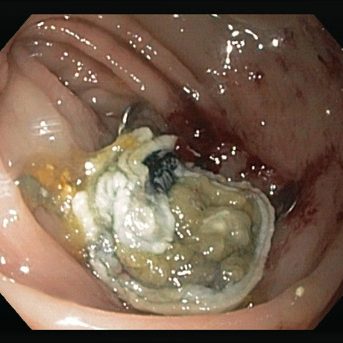
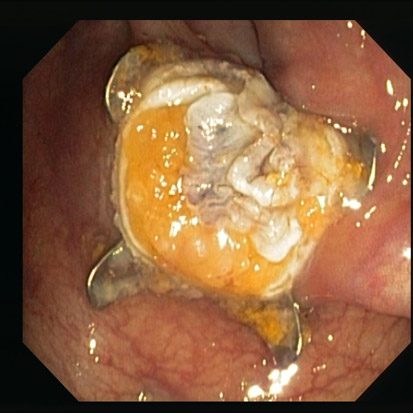
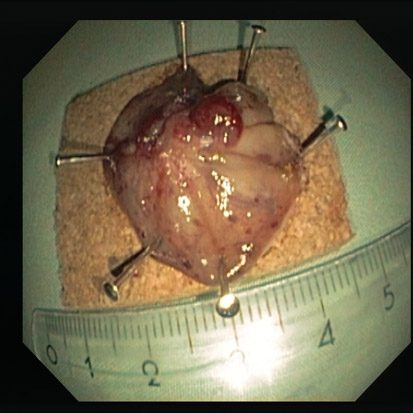
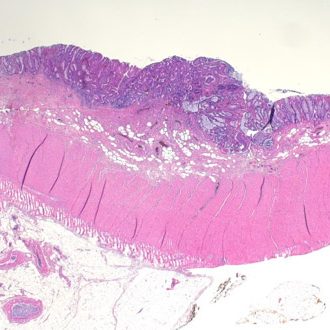
Example 3*:

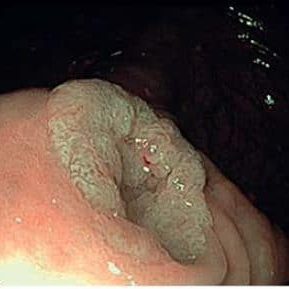
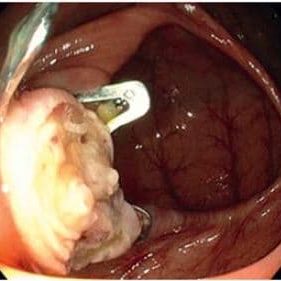
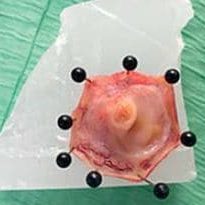
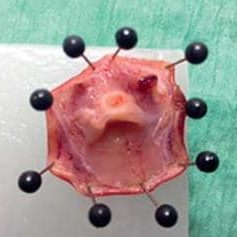
Resection of a recurrent adenoma (HGIEN) in the descending colon (non-lifting sign)

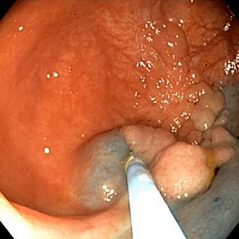
Recurrent adenoma in the descending colon, non-lifting sign
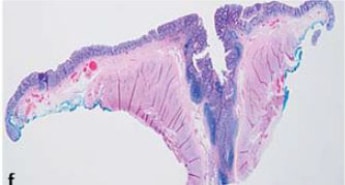
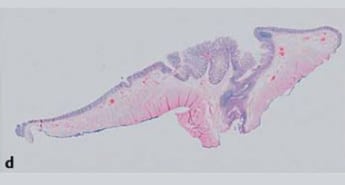
Status post EFTR with FTRD®: cross section showing all layers of the bowel wall
Full-thickness specimen, approx. 2.5 cm
Histology confirms completely resected recurrent adenoma, HGIEN

* Source: Prof. K. Caca and Dr. A. Schmidt, Klinikum Ludwigsburg, Dept. of Internal Medicine, Gastroenterology, Hemato-Onkology, Diabetes and Infektious Diseases, Germany

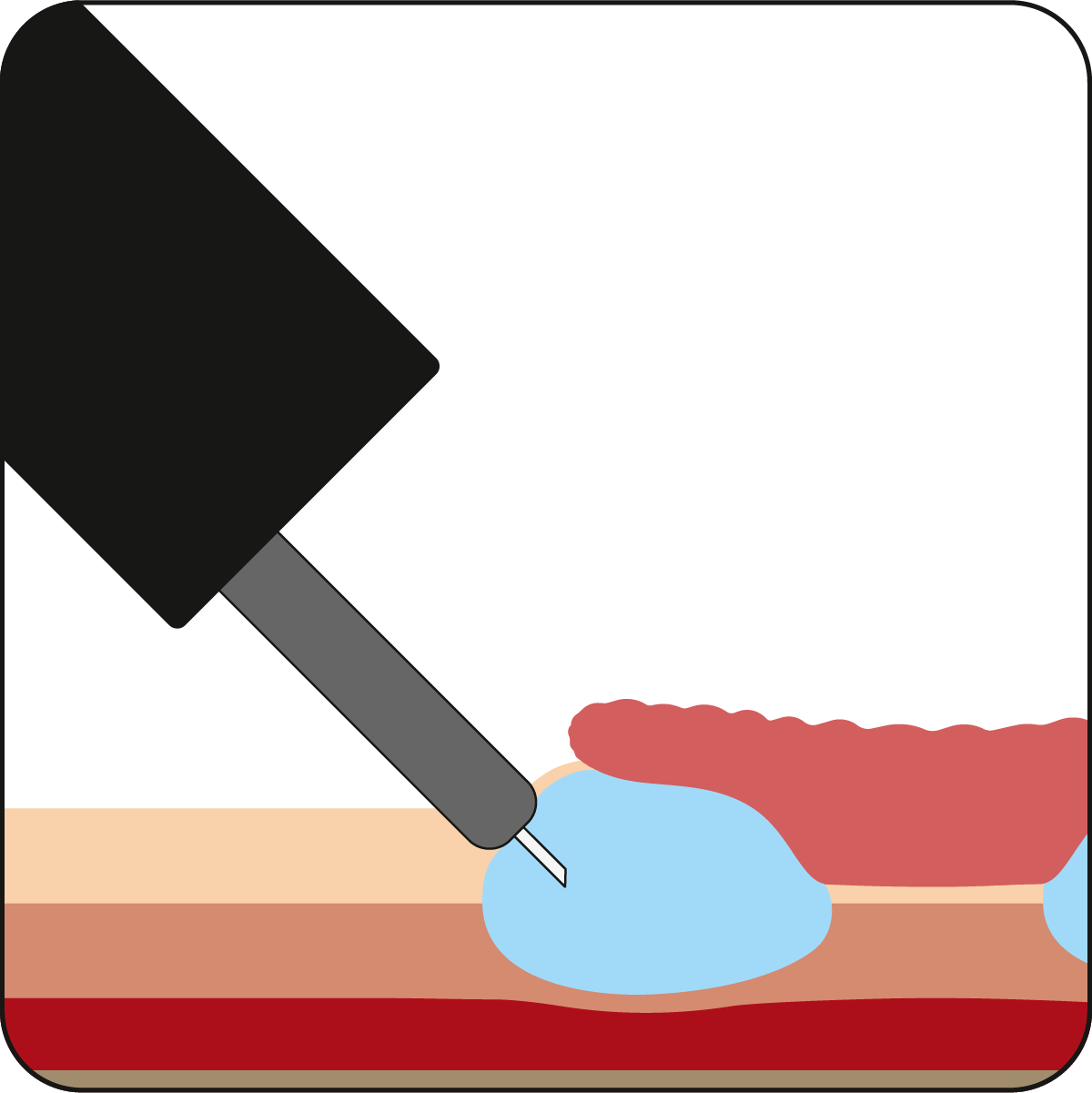
Identify the lesion with positive lateral lifting sign and central non-lifting component
Inject into the submucosal layer in the area with positive lifting sign
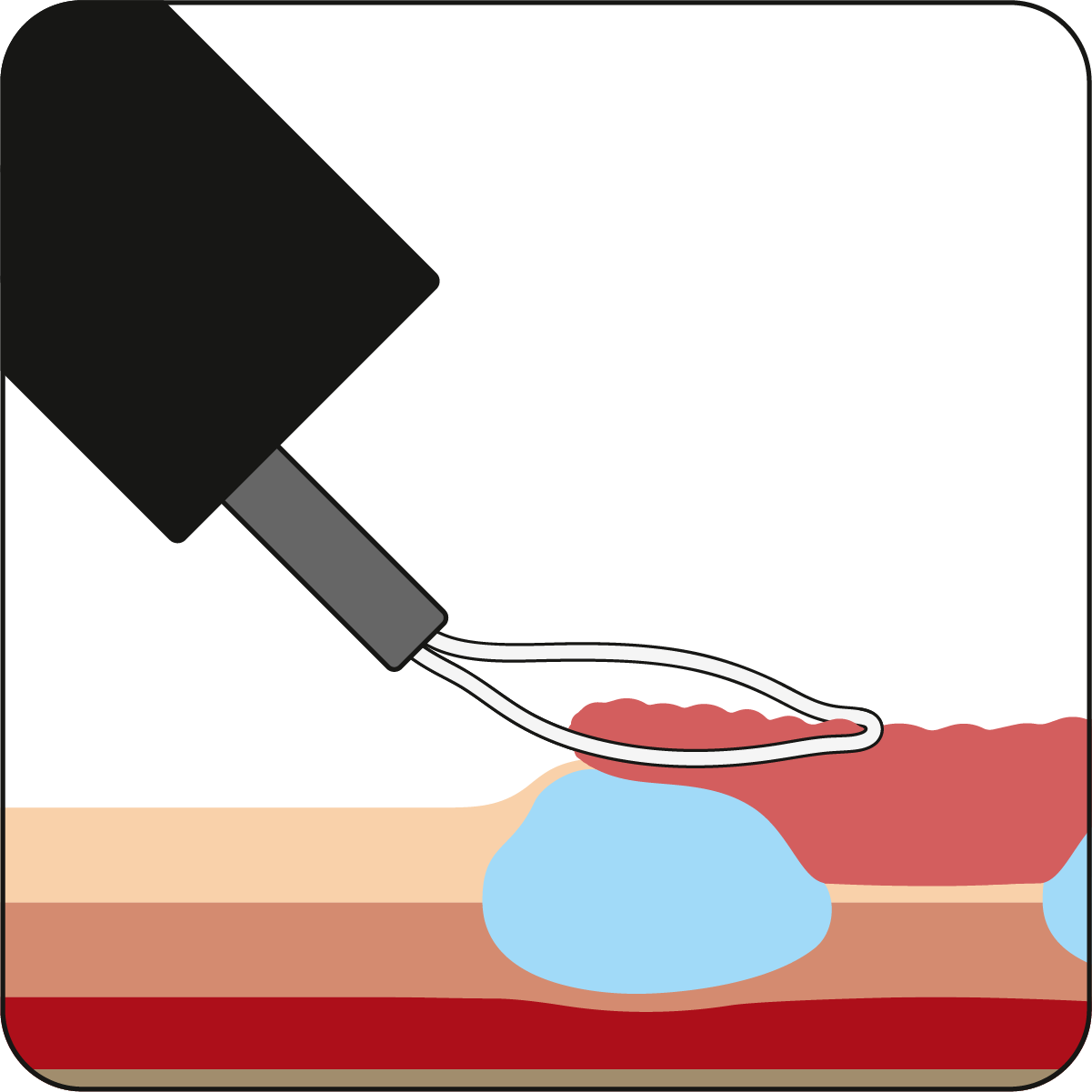
Resect the lateral area with the snare using piecemeal technique
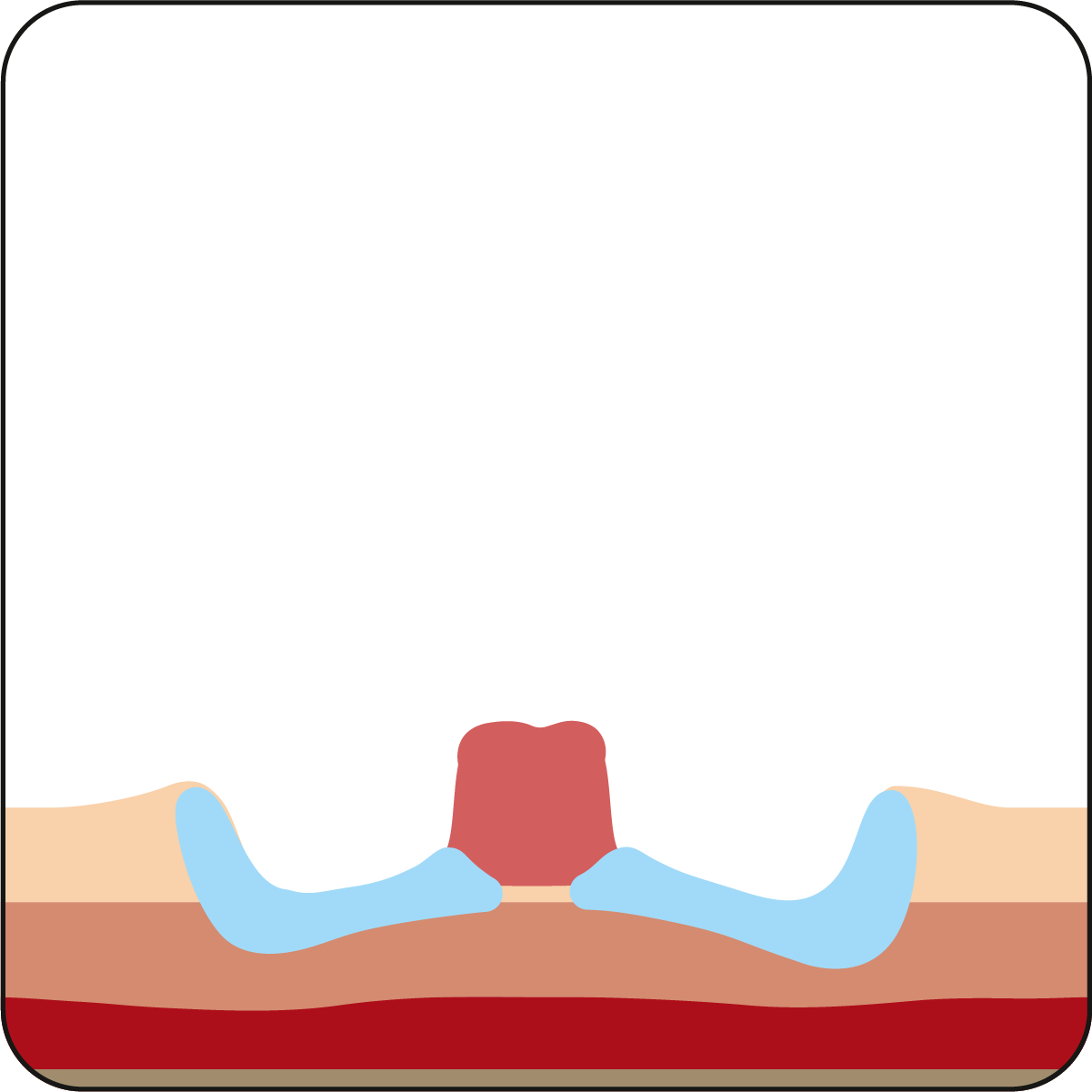
Switch to FTRD®neo and grasp the remaining non-lifting central component of the lesion with the FTRD® Grasper
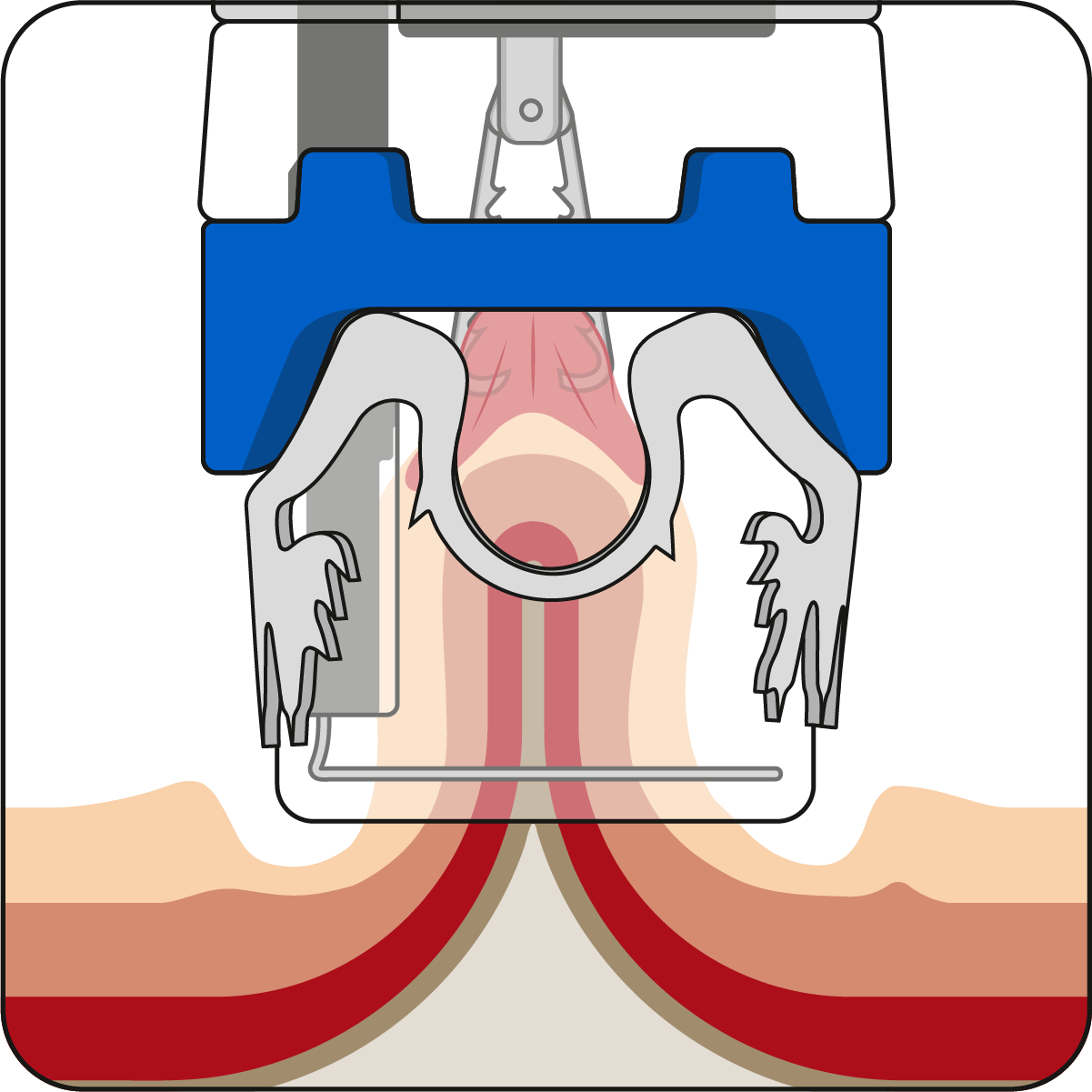
Deploy the FTRD®neo clip and…
…resect the tissue with the integrated snare

Example 1*:

Resection of a large adenoma in the cecum using Hybrid-FTRD® technique – (Click here to watch the corresponding clinical video)

* Source: Prof. K. Caca and Dr. B. Meier, Hospital Ludwigsburg, Germany

Example 2*:

Resection of a recurrent adenoma in the sigmoid colon using Hybrid-FTRD® technique – (Click here to watch the corresponding clinical video)

* Source: Prof. K. Caca and Dr. B. Meier, Hospital Ludwigsburg, Germany

Example 3*:

Resection of an approx. 35 mm non-lifting adenoma (LST, granular type) in the sigmoid colon; 3-month follow-up with no recurrence

* Source: Dr. M. Bauermeister, Sana Klinikum Lichtenberg Berlin, Germany

Example 4*:

Resection of an approx. 25 mm non-lifting recurrent adenoma (LST, granular type) in the upper rectum

* Source: Dr. M. Bauermeister, Sana Klinikum Lichtenberg Berlin, Germany

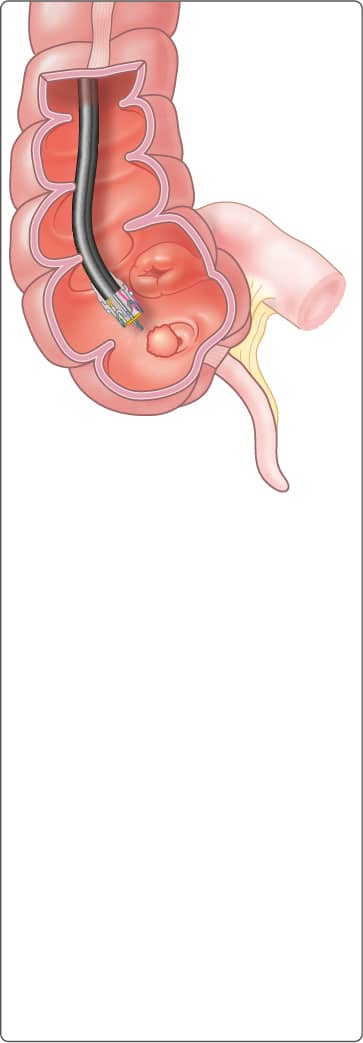
Schematic illustration of the EFTR procedure for a polyp at/in the appendiceal orifice
* Source: Rogier Trompert Medical Art, www.medical-art.nl

Clinical Example*:

* Source: Bronzwaer M, Bastiaansen B, Koens L et al. Endoscopic full-thickness resection of polyps involving the appendiceal orifice: a prospective observational case study. Endosc Int
Open 2018; 06: E1112–E1119

Clinical example videos:

Prof. K. Shishin MD, Moscow Clinical Research Center, Russia
Click here to watch the clinical video

Dr. B. Bastiaansen, UMC Amsterdam, Netherlands
Click here to watch the clinical video

Media

{{pluginSettings.generalSettings.writing.no_results}}
of {{actionSettings.pagesCount}}

TOP