

 Deutsch
  Français
  Español
  Português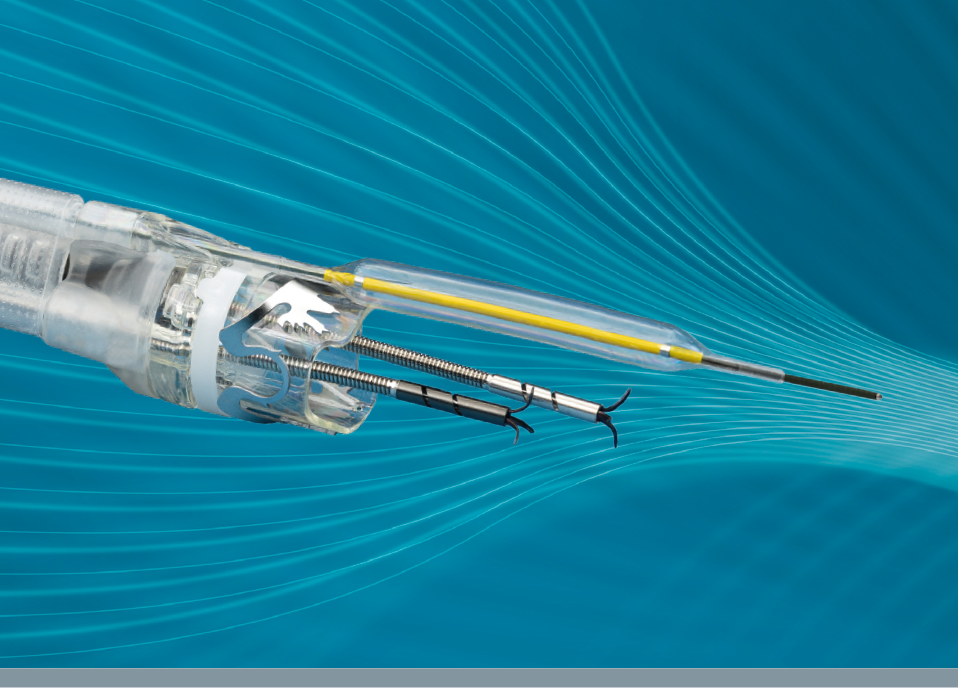
BARS® for anastomotic reduction
Clinical insights on associated weight regain and dumping syndrome
Key clinical findings
- BARS® is a novel endoscopic system designed to treat enlarged anastomoses, which can occur after bariatric bypass
- Early clinical data show promising results in weight regain and dumping syndrome management
- First U.S. experience: 100% technical success, 10.5% total body weight loss (TBWL) at 1 month, no adverse events3
- REDUCE study: 77% anastomotic reduction, significant symptom improvement in dumping syndrome5
- Further clinical data from expanded patient cohorts currently in preparation
Overview
Transoral outlet reduction (TORe) and anastomotic reduction techniques are gaining momentum as minimally invasive alternatives to surgical revision for managing post-surgical complications such as weight regain and dumping syndrome.1
BARS® — a novel endoscopic platform developed by Ovesco Endoscopy AG — is among the emerging technologies in this field. As clinical experience with BARS® grows, early data on weight regain management and targeted treatment approaches for enlarged anastomoses in patients with dumping syndrome show promising results. 2, 3, 4, 5
As clinical experience with BARS® expands and additional data becomes available, this innovative technology may offer new opportunities to enhance patient outcomes and broaden the therapeutic toolkit in endoscopic bariatric care.
BARS®
BARS® (Ovesco Endoscopy AG)
BARS® is a novel, minimally invasive endoscopic platform designed to treat enlarged anastomoses, which can occur after bariatric bypass. Based on the well-established OTSC® System, BARS® is a complete treatment unit featuring two additional working channels that enable simultaneous use of three application aids with therapeutic single-channel endoscopes.1 Two application aids are used for parallel manipulation of tissue into the cap chamber and a balloon to maintain a defined residual lumen (see video above).
Key features:
- Minimally invasive endoscopic approach
- Safe and effective technique2, 3, 5
- Low-complication procedure with easy handling4
Clinical evidence
Anastomotic reduction in weight regain: Study results and case example
Weight regain after RYGB affects 20-25% of patients, with gastrojejunal anastomosis dilation (>15 mm) being a key contributing factor.¹ Initial clinical experience with the OTSC® System established endoscopic anastomotic reduction as a feasible minimally invasive approach.2 Building on these results, BARS® was developed as a specialized platform specifically designed for this application, offering optimized instrumentation and dedicated features for anastomotic reduction.1
Heylen et al. demonstrated the efficacy of the OTSC® System in 94 patients with weight regain after gastric bypass.2 The study achieved a significant reduction in anastomotic diameter from 35 mm to 8 mm, with sustained weight loss reflected in a BMI decrease of ~16% from 32.8 to 27.4 at 12-month follow-up. No major complications were reported.
Firkins et al. reported the first U.S. clinical experience with BARS® in three patients experiencing weight regain after RYGB.3 The study demonstrated 100% technical success with ≥70% anastomotic reduction and a mean TBWL of 10.5% at 1 month. No adverse events were reported in this initial case series, with additional clinical data from an expanded cohort currently in preparation.
Case example: First U.S. BARS® experience3
A 52-year-old female patient presented after bypass (RYGB in 2009) with 67.3% weight regain. Her enlarged gastrojejunal anastomosis was successfully treated with BARS® in a single endoscopic session.
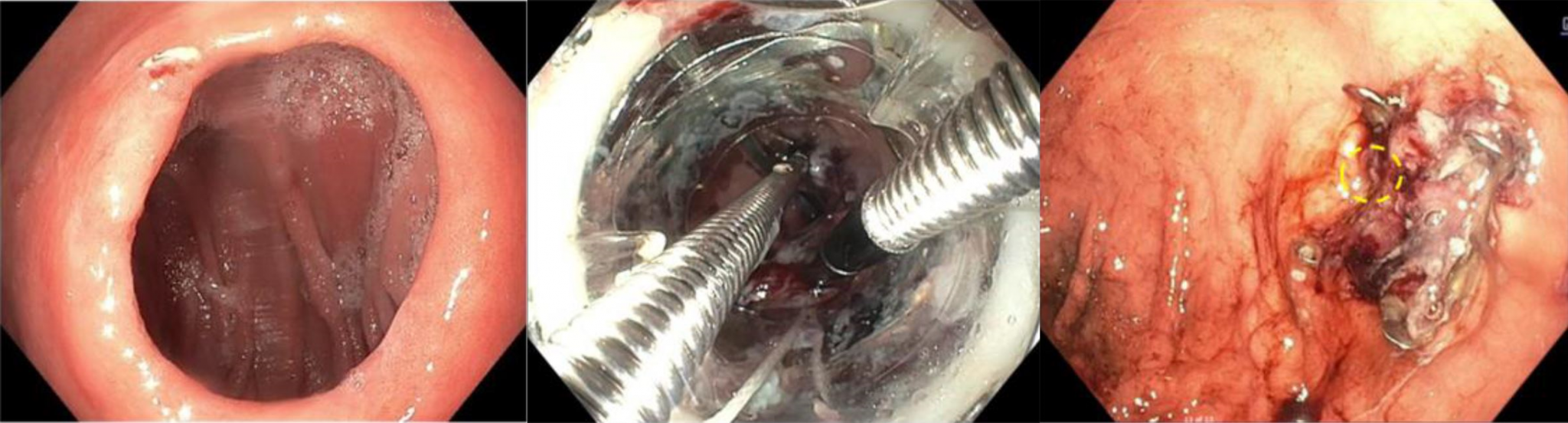
Endoscopic view of the anastomosis before (20 mm), during and after BARS® treatment (5 mm).3
Key results:
- Anastomotic reduction: 20 mm → 5 mm (75% reduction)
- Weight loss at 1 month: 12.2 kg (13.5% TBWL)
- BMI reduction: 40.5 → 36.0 kg/m² (-4.5 kg/m²)
The procedure was completed in 48 minutes with no adverse events reported. The authors reported a steep learning curve, with procedure time decreasing to 19 minutes by case 3, suggesting BARS® can become a rapid ~20-minute procedure with operator experience.
Anastomoses treatment in patients with dumping syndrome
Enlarged anastomoses following RYGB are often associated with dumping syndrome, affecting patient quality of life.¹ Endoscopic lumen reduction with BARS® offers a targeted, minimally invasive approach by slowing gastric emptying and restoring restrictive capacity.
The REDUCE study5
Küllmer et al. investigated BARS® for anastomotic reduction in 23 patients with dumping syndrome after RYGB at three tertiary care centers in Germany.
Key results:
- Anastomotic reduction: 38.0 mm → 8.9 mm (77%)
- Sigstad-Score improvement: -12.5 points (from 17.5 to 5 points) at week 12 (p<0.001)
- No major complications
The REDUCE study confirms that BARS® is an effective minimally invasive alternative for patients with dumping syndrome, delivering significant improvements in both objective measurements and patient-reported symptoms.
Complementary technology: stentFIX System
Beyond anastomosis management, the stentFIX System offers a specialized solution for the fixation of endoscopic stents in the gastrointestinal tract. This system is particularly valuable in bariatric patients for securing stents used to manage leaks, strictures, or fistulas, significantly reducing the risk of stent migration and improving clinical outcomes.1
Clinical evidence
Bronswijk et al. evaluated the stentFIX System in 20 bariatric patients (90% RYGB, 10% mini-bypass) undergoing single-session endoscopic ultrasound-directed transgastric ERCP (EDGE).6
Key results:
- Zero LAMS migration (0% in all patients)
- 95% technical success rate for single-session EDGE
- No procedural delay (vs. typically 1-2 week for fistula maturation)
- Only 10% minor adverse events (procedure-related; none attributed to stentFIX System)
The stentFIX System is designed for ease of use and reliable fixation, making it an essential addition to the bariatric endoscopist’s toolkit for managing complex post-surgical complications.1
Summary and outlook
Innovations in endoscopic bariatric care continue to evolve, offering new approaches to managing post-surgical complications. As clinical experience with BARS® grows, more centers worldwide are exploring how this technology may fit into their treatment algorithms.
Current evidence suggests:
- BARS® demonstrates promising early results in anastomoses management in weight regain and dumping syndrome
- The procedure appears safe and feasible in initial clinical experience
- Further clinical data from expanded patient cohorts are currently in preparation
- Complementary technologies like the stentFIX System expand the therapeutic options for bariatric complications
Learn more
Interested in learning more about BARS® and how it may complement your clinical practice?
Resources:
- BARS® product page – Technical specifications and clinical information
- stentFIX product page – System details and applications
- Download BARS® Clinical Bulletin – Clinical evidence and applications
- Watch BARS® procedure video – See the technique in action
- Contact your local representative – Questions or demonstrations
Stay updated:
- Subscribe to our scientific newsletter – Latest clinical insights and product updates
- Follow us on LinkedIn – Conference highlights and new publications
We look forward to supporting you as you explore these emerging endoscopic solutions.
References
- Ovesco Endoscopy AG. BARS® for endoscopic anastomoses treatment and lumen reduction; OTSC® and stentfix OTSC® for complication management in patients after previous bariatric interventions. Clinical Bulletin. BARS_CB_eng_Rev03_2025-01-21_800143.
- Heylen AM, Jacobs A, Lybeer M, Prosst RL. The OTSC®-clip in revisional endoscopy against weight gain after bariatric gastric bypass surgery. Obes Surg. 2011 Oct;21(10):1629-33. doi:10.1007/s11695-010-0253-5.
- Firkins SA, Sierra L, Khurana A, Chatterjee A, Patel R, Flora B, Staneff E, Simons-Linares R. Raising the BARS: First U.S. Experience of a Novel System for Endoscopic Gastrojejunal Anastomosis Revision. Techniques and Innovations in Gastrointestinal Endoscopy. 2025;250944. doi:10.1016/j.tige.2025.250944.
- Di Lorenzo N, Camperchioli I, Scozzarro A, Grossi C, Altorio F, Caputo A, Gottwald T, Schurr MO. Bariatric reduction system – BARS®: device, technique and first clinical experience. Minim Invasive Ther Allied Technol. 2021 Aug;30(4):187-194. doi:10.1080/13645706.2020.1729206.
- Küllmer A, Kandler M, Nagl S, Laubner K, Mueller J, Meyer-Steenbuck M, Kaeser R, Sturm L, Seufert J, Thimme R, Schmidt A. REDUCE – Over-the-scope clip-based endoscopic anastomotic reduction in patients with dumping-syndrome after gastric bypass. Endoscopy 2025; 57(S 02): S81-S82. doi:10.1055/s-0045-1805254.
- Bronswijk M, Gökce E, Hindryckx P, van der Merwe S. Single-session endoscopic ultrasound-directed transgastric endoscopic retrograde cholangiopancreatography with a dedicated over-the-scope fixation device: Feasibility study (with video). Dig Endosc. Published online 2024, July 28. doi:10.1111/den.14879.
The information contained on this website is for professional information purposes only and is intended for healthcare professionals. For complete product information, including indications, contraindications and safety information, please refer to the Instructions for Use (IFU). The described products may not be approved or available for sale in all countries. Please contact your local Ovesco representative for information on product availability in your region. The content of this newsletter has been carefully prepared. However, Ovesco Endoscopy AG does not guarantee that the information is complete, accurate, or up to date. Subject to changes and errors.
© 2025 Ovesco Endoscopy AG. All rights reserved.

|

|